
Back into production.
We use reverse engineering to redesign parts made of plastic, GRP or metal that are no longer available and bring them back into short-run production as vacuum-formed plastic parts. We take new projects through to production readiness as well.
For manufacturers, brands and dealers. Three photos are enough for the first step, with no obligation.
- 01Point cloud
- 02Surface model
- 03CNC trimming
How your part is made
-
01
Your original part
Used, broken or yellowed. One sample is enough.
-
02
Captured and engineered
3D scan, redesign and improvement of the original’s weak points.
-
03
Back in production
Formed, trimmed and released with a first article inspection report.
- Forming areaup to 1200 × 2000 mm
- Sheet thickness3.0 – 14.0 mm
- CNC trimming3- to 5-axis
- MaterialsABS · ASA · PMMA · PC · PETG · TPE
- Economicalfrom around 150 units
The tool is gone. The part isn’t.
Obsolescence management means keeping parts available after their production has ended. When a plastic part is discontinued, the demand does not disappear. It simply goes elsewhere.
The same refusal every month
Telling the same dealer “no longer available” for the third time costs no tooling investment. It costs the relationship you have spent years building.
The line item has no price
A gap in the spare parts portal travels. The customer looks for the part elsewhere and next time also buys there what you could still supply.
The tooling budget is not approved
An injection mould spreads its cost over large volumes. For demand in the hundreds, nobody gets that investment signed off.
What doing nothing costs.
We do not put a figure here. You enter your own, and the tool is later weighed against that amount.
The preset figures are examples. Your entries stay in your browser.
The window we work in.
Every process has its volume range. The feasibility check first tells you whether your demand falls into ours, and names the right process if it does not.
Schematic illustration, not measured values. The crossover points shift with geometry, material and wall thickness.
Four steps, one part.
A plastic sheet is heated, drawn over the forming tool and pulled into shape by vacuum. CNC trimming follows.
Redesigned for production.
The scan is the starting point, not the result. We redesign the part and improve what did not hold up on the original: brackets, fixing points, wall thicknesses. The drawing with dimensions and tolerances is the basis for production, inspection and repeat orders.
The whole chain, one supplier.
Six steps. After each one you hold a result in your hands, and nothing moves on until you approve it. If finished 3D data exists, the chain starts at step 3.
- 01
Reverse Engineering3D scanning and measurement
The original part is captured optically: geometry, wall thickness distribution, distortion. One part is enough.
send a sample - 02
Scan-to-CADSurface reconstruction
The point cloud becomes a CAD model with clean surfaces. You receive it as STEP and STL.
review the model - 03
Design for ManufacturingDesign for vacuum thermoforming
Radii, wall thicknesses and draft angles are designed for forming. Along the way we improve the original’s weak points, such as broken brackets, thin areas or awkward fixings.
approve the design - 04
Rapid ToolingMaster pattern and forming tool
The forming tool is a separate item in the quote. Once paid for, it belongs to you, and we store it for repeat orders.
receive a progress update - 05
First Article InspectionFirst article approval
The first part is measured by 3D scan. The inspection report shows the nominal-actual comparison at defined measuring points.
release production - 06
Low-Volume ProductionShort-run manufacturing
Vacuum thermoforming, CNC trimming, finishing and assembly preparation, including repeat orders.
reorder
- Assessment1–2 working days
- Scan and design1–3 weeks
- Tool and first article2–5 weeks
- Productionby arrangement
Does your part fit this chain? Three photos are enough for an assessment.
Check feasibilityWhat the machine can take.
And what it cannot. Limits we put on the table before we quote.
| Forming area | max. 1200 × 2000 mm |
|---|---|
| Sheet thickness | 3.0 – 14.0 mm |
| CNC trimming | 3- to 5-axis |
| Materials | ABS · ASA · PMMA · PC · PETG · TPE |
| Process | Vacuum thermoforming, without plug assist |
| Tolerance | part-dependent, stated in the quote |
| Surface | smooth matt, smooth gloss, paintable; others on request |
| Colour | black; others depending on sheet availability |
| CAD data | STEP and STL |
| Inspection report | nominal-actual comparison from the 3D scan |
Undercuts
An undercut cannot simply be released from the tool. It needs a split in the tool or a change to the part; both are discussed before design.
Residual wall thickness
Wall thickness decreases with draw depth, most of all in the corners. We state the residual wall thickness at defined points before you approve.
Fine details
Threads, fine ribs and sharp inside edges do not belong in a formed part. They are added as inserts or during finishing.
Small quantities
Below around 150 units the tool rarely pays off. We will say so and name the process that fits, even if it is not ours.
Two customer groups, one process.
Manufacturers and brands
You are responsible for spare parts supply for model ranges that left production long ago. We keep the line item available without you having to request an injection mould.
Dealers and shops
You see the demand in your own search statistics. We make the part without VAKURA marking, under your name and after your approval.
Tool and data belong to you
Forming tool and CAD data become your property once paid for. We store the tool for your repeat orders.
Protected from the first photo
On request we sign a non-disclosure agreement before you send us photos, samples or drawings.
No sales team
You speak directly to the engineer who designs your part.
Brought back into production.
Examples of plastic parts VAKURA has brought back into production: reverse engineering, tooling and production from one source.
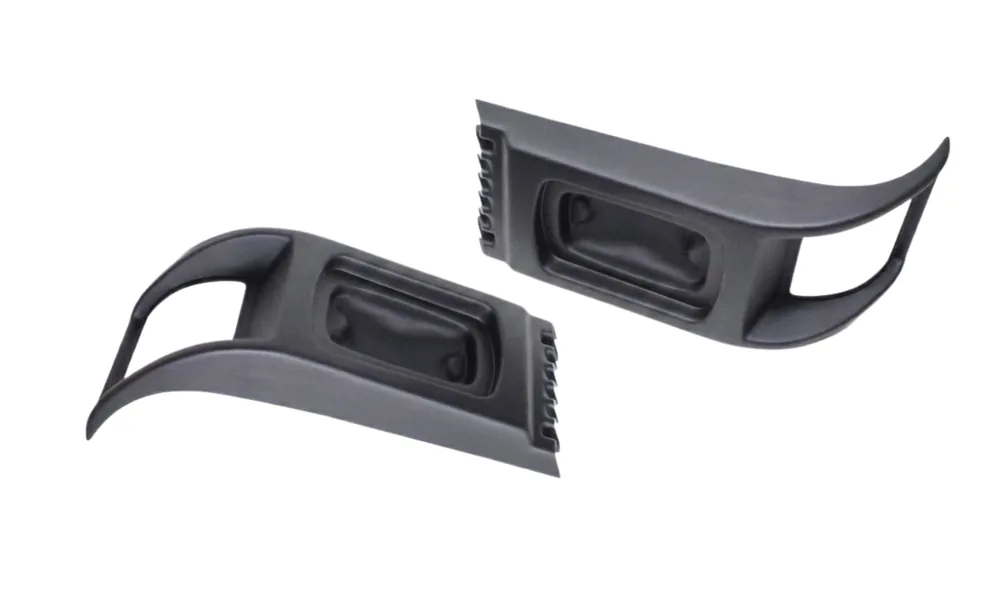
Fog light housings
- Material
- ABS
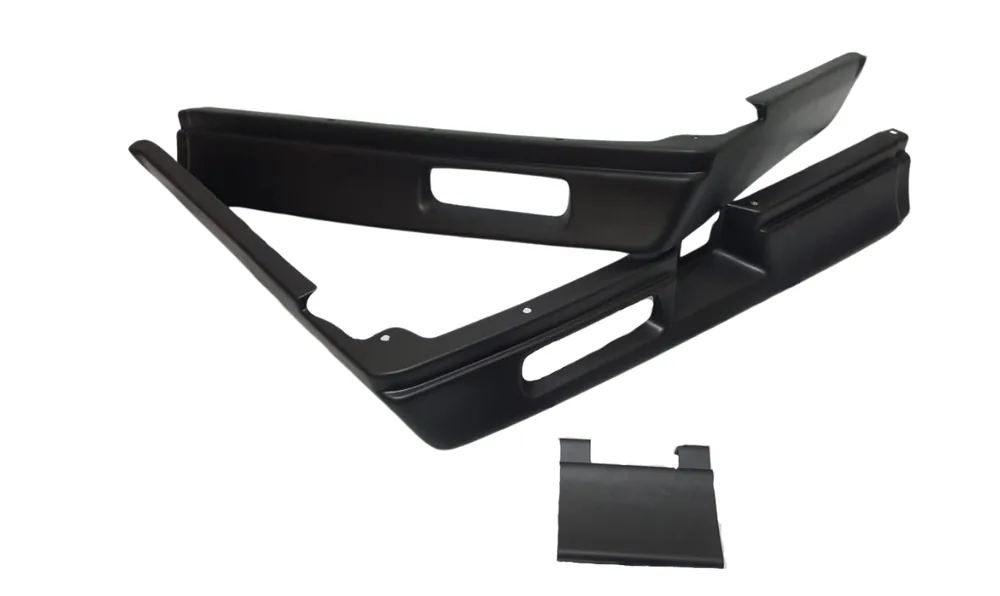
Front spoiler
- Material
- ABS
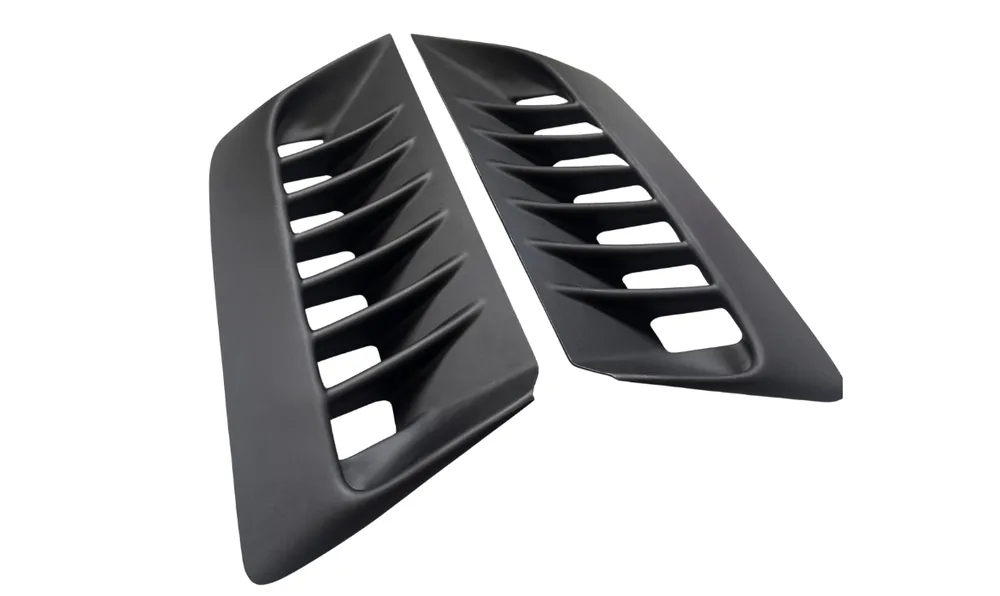
Side vents
- Material
- ABS
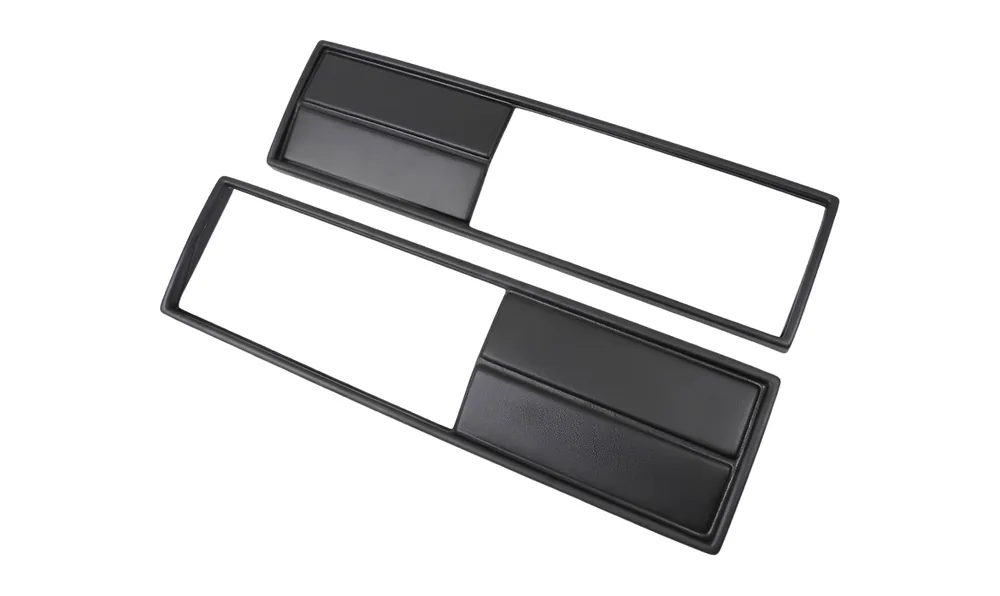
Rear light surrounds
- Material
- ABS
Spare parts supply secured. From the original part to series production.
When the injection mould has been scrapped but demand remains, VAKURA is your partner. We handle the entire process from a single source, so you can focus on your core business.
One contact, one responsibility
From feasibility check through design and tooling to series production and repeat orders.
Better than the original
We redesign the part and eliminate weak points in brackets, wall thicknesses and fastening.
Economical from around 150 units
A forming tool in a different cost class from an injection mould.
Verified quality
You approve the design and receive a first article with an inspection report before every production run.
Your property
The tool and CAD data belong to you, and we store the tool for repeat orders.
Under your own name if required
For dealers without VAKURA branding, under a non-disclosure agreement if required.
For manufacturers, brands and dealers who want to keep supplying their customers. Engineering expertise from first scan to series.
For your industry.
Typical parts from vehicles, caravans and machinery.
Classic and modern classic cars
Trim panels, fascias, housings and grilles, under the dealer's own name if required.
Motorhomes and caravans
Large, flat interior and exterior parts for discontinued model series, in the right plastic for interior or exterior use.
Machinery and plant engineering
Covers, guards and housings, with a first article, an inspection report and data that you own.
What buyers ask first.
What does it cost?
Two items, shown separately: the forming tool once, the part price per unit. The tool sits in a different cost class from an injection mould, which is why it already pays off in short runs.
We only need 80 units. Is it worth it?
For a one-off batch, usually not, and we will tell you so. With recurring demand the tool remains in place and every repeat order only carries the part price.
How long does it take to reach production?
Typically 1–2 working days for the assessment, 1–3 weeks for scan and design, and 2–5 weeks for tool and first article. These are guide values, not delivery dates; the quote is binding.
Which surfaces and colours are possible?
Smooth matt, smooth gloss or paintable; other surfaces on request. The standard colour is black, other colours depending on sheet availability.
Why not just 3D printing?
For very small quantities, additive manufacturing is often cheaper. With large parts and recurring demand, that shifts. The feasibility check names the right process for you.
We have no drawing and no CAD data.
An original part is enough. The CAD model is built from it. Even a damaged part will do; missing areas are completed in the design.
Is it a reproduction of the original?
No. The scan is the starting point; the part is redesigned. Along the way we improve known weak points, for example on brackets, fixing points or thin wall areas. Design changes are agreed with you before design approval.
Who owns the tool and the CAD data?
You do. Forming tool and CAD data become your property once paid for. We store the tool for your repeat orders; you receive the data as STEP and STL.
Do you treat our enquiry confidentially?
Yes. On request we sign a non-disclosure agreement before you send us photos, samples or drawings. On request we also make parts without VAKURA marking, under your name.
Is the part approved by the vehicle or equipment manufacturer?
No. VAKURA manufactures to your sample and your approval, which you give after the first article with inspection report. This does not imply approval by the original manufacturer.
What about intellectual property rights in the original part?
We manufacture on behalf of our customers. As the client, you clarify the rights to the part before your enquiry; if third-party rights exist, please raise this straight away.
You are new. Why should we trust you with a part?
Because you review every step before production: the CAD model, the design and the first article with inspection report. And because our reference parts are already in production and being reordered.
One part is enough.
Send three photos and the quantity. You receive an assessment of process, volume window and the items in the quote. Free of charge and with no obligation.
- Stage A
You send three photosThe part and where it is fitted. Five minutes of work.
- Stage B
You send a sample partAn original part, even a damaged one. The quote is based on it.
- Stage C
You approveThe first article with inspection report. Only then does production start.